 |
|
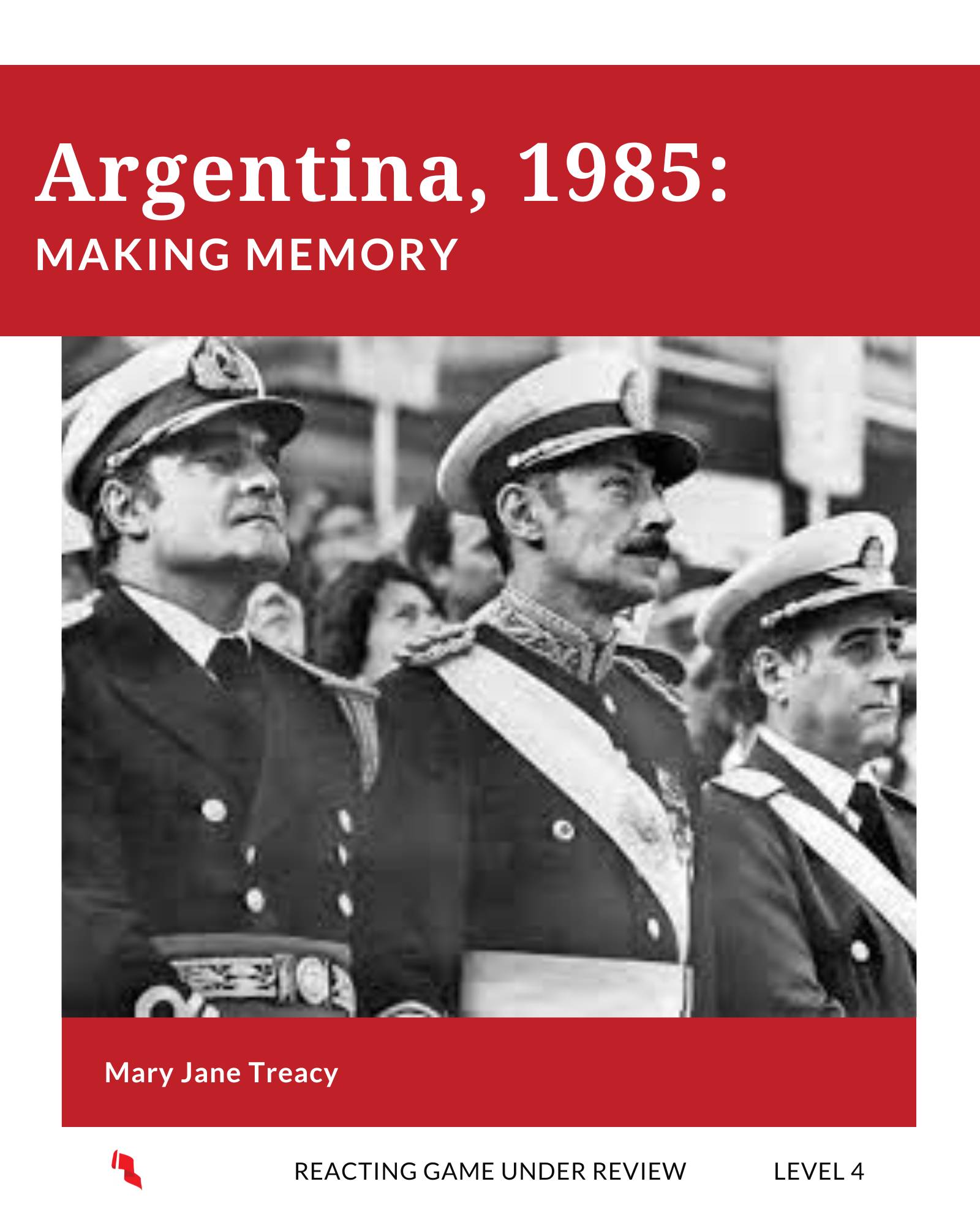 | Argentina, 1985: Making Memory Argentina is at a crossroads. A military dictatorship has ended, a democratically elected president has taken office, and the nation begins to address its violent past: repression, political violence, labor unrest, "disappeared" citizens. This game brings these national debates to a secondary school that asks its students to seek information, tell a story about what happened at the school, and determine a path forward. 6+ Sessions 28-33 Students 20th Century South America
|
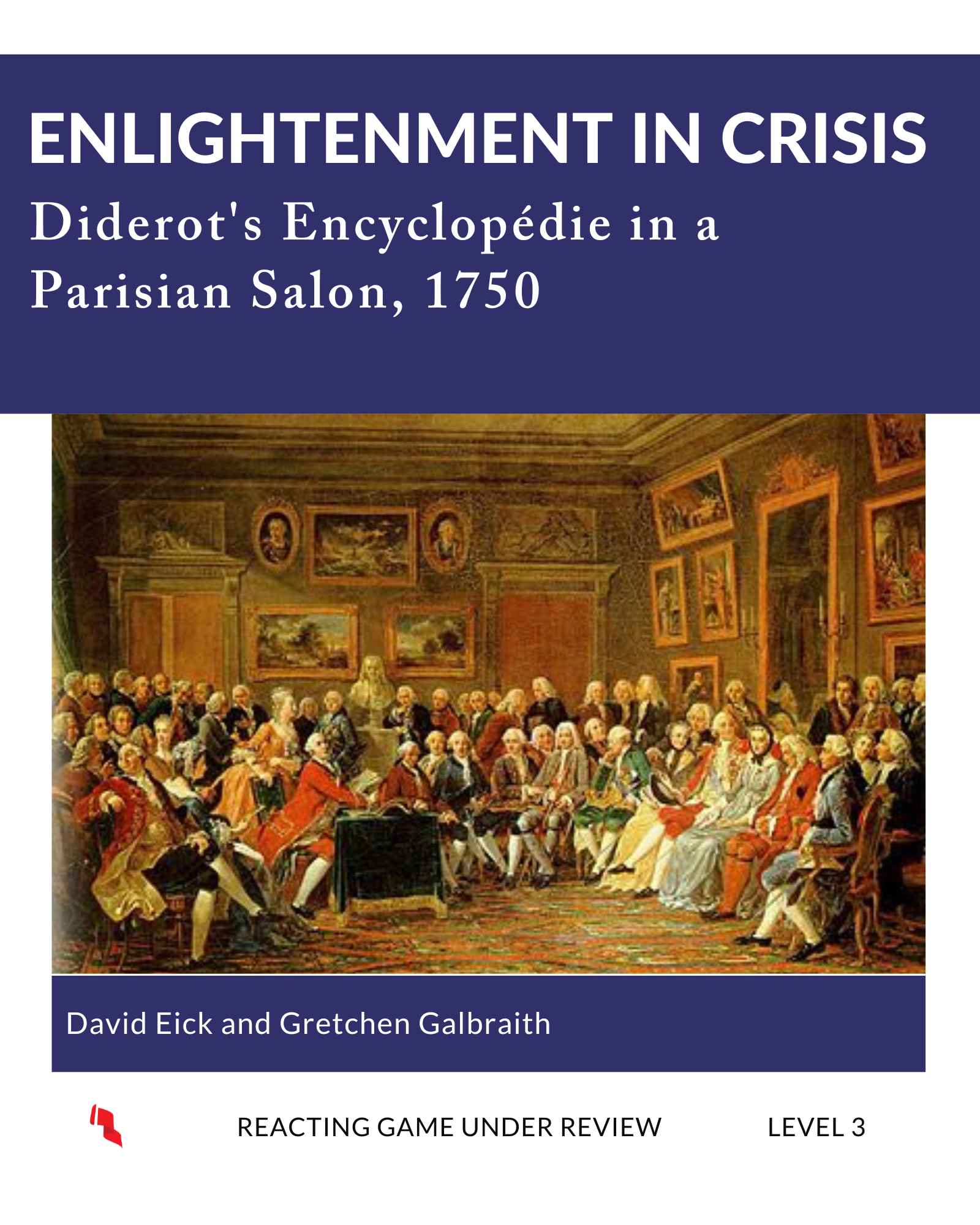 | Enlightenment in Crisis: Diderot's Encyclopedié in a Parisian Salon In the late 1740s a rich Parisian widow began hosting a weekly luncheon for writers, statesmen, and artists to discuss new ideas in a convivial setting. A consortium of publishers contracted an obscure hack writer named Denis Diderot to translate a British dictionary into French. Now Madame Geoffrin's salon has come to rival the royal court at Versailles for prestige and exclusivity, while Diderot has begun to transform the dictionary into a massive encyclopedia purporting to represent everything, to treat knowledge as an open-ended conversation, and to "change the common way of thinking." The first volume of this literary monument of Enlightenment is to be published shortly in 1751. How will the Monarchy and the Church respond? 8-11 Sessions 11-33 Students 18th Century Europe
|
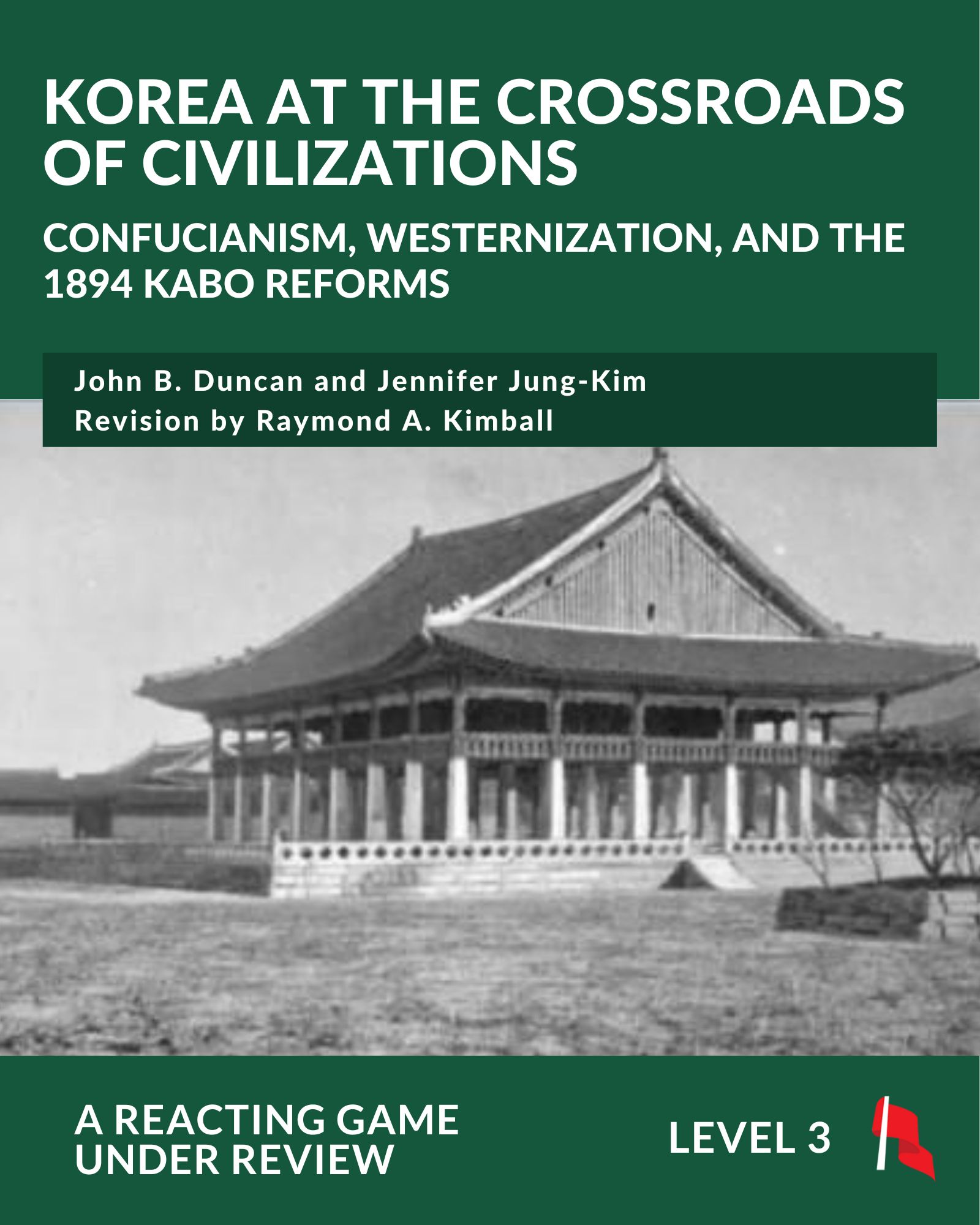 | Korea at the Crossroads of Civilizations: Confucianism, Westernization, and the 1894 Kabo Reforms Reform has swept through East Asia following the irruption of Western imperialism in the second half of the nineteenth century. Set in the Deliberative Council, a body established by the Korean court in the midst of the Sino-Japanese War to discuss and implement measures to restructure government, economy, society, and education. 6-16 Sessions 10-26 Students 19th Century Asia
|
 Level 3
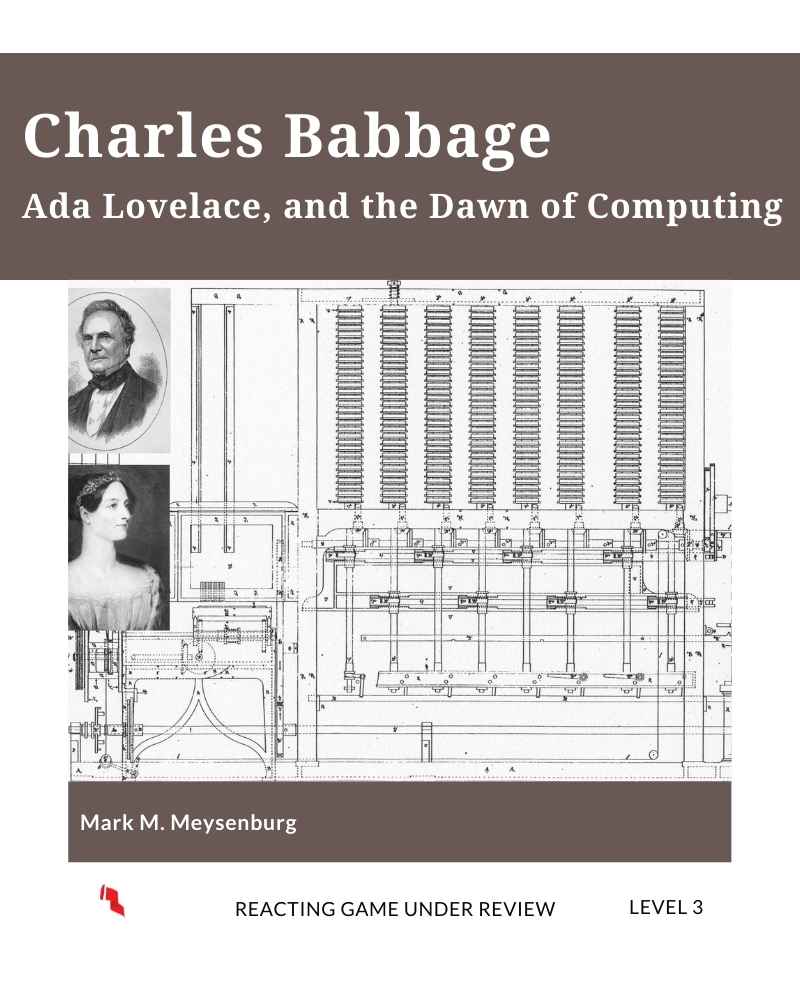 | Charles Babbage, Ada Lovelace, and the Dawn of Computing Should Charles Babbage be awarded funds from the British government for the development of his Difference Engine and/or Analytical Engine? Intellectual collisions concern the conflict between imagination and reason, the nature of science and scientists, and whether and to what degree science and engineering projects should be subsidized by the government. 8-12 Sessions 14-25 Students 19th Century Europe
|
 | Politics, Religion, and the Birth of the Public Sphere: England, 1685-1688 This game places students in the turbulent political and religious debates of late seventeenth century England, debates that were fundamental in shaping modern civil society. Concludes by simulating the so-called “Glorious Revolution” of late 1688, resolving important player actions throughout the game. 3-6 Sessions 12-35 Students 17th Century Europe
|
| Christine de Pizan and the Querelle des Femmes, 1413 Christine de Pizan and the Querelle des Femmes examines the power, authority, and roles of women in the 1413 French court. Debates over misogyny in literature, legal theory, and political roles demonstrate the centrality of both women and gender to major issues in late medieval France. 2-12 Sessions 12-31 Students 15th Century Europe
|
| CONGRESS OF VIENNA Europe’s leaders gather in Vienna to restore Europe after a quarter century of revolution, war and conquest from the French Revolution to the defeat of Napoleon Bonaparte. They must wrestle with competing ideals of legitimacy, nationalism and the balance of power as they seek to restore a Europe shattered by Napoleon's conquests and create an enduring peace.
|

 | After a Long Battle: Congressional Response to the AIDS Epidemic, 1982-1985 Asks players to put themselves in the shoes of those living at the height of the AIDS epidemic in America when next to nothing was known about the virus. By taking the roles of congressional representatives, government epidemiologists, doctors, researchers, gay activists, preachers, journalists, and citizens, students can understand the radical changes to society when a new disease caught the country unprepared. 6-11 Sessions 10-30 Students 20th Century North America
|
 | Diet and Killer Diseases: The McGovern Committee Hearings, 1977 Many trace the origin of the low-fat diet craze to the Senate hearings of the McGovern Committee in 1977. This game examines the scientific evidence available in 1977 by expanding the hearings to include a larger range of voices than were invited to the actual hearing. Students will take the role of senators and the media while examining scientific evidence at the time linking dietary fat to health. 3-8 Sessions 6-36 Students 20th Century North America
|
 | Egypt 1920s: Feminism, Nationalism, and Islam Egypt has gained limited independence from Great Britain and a new constitutional monarchy. But 18 months in, the new democratic mechanisms are already faltering. Furthermore, Egypt is not fully independence. Students are politicians, industrialists, feminists, reformers, and religious leaders debating whether different proposed reforms are making Egypt modern or western. 8-10 Sessions 18-33 Students 20th Century SW Asia
|
 | Progressivism at High Tide: The Election of 1912 Places students in the midst of one of the most fascinating political events of U.S. history--the presidential election of 1912, in which all of the candidates described themselves as "progressive." But what did it mean to be "progressive"? Students must question the basic principles of progressivism, and how could one apply those principles into specific policy questions. 8 Sessions 13-31 Students 20th Century North America
|
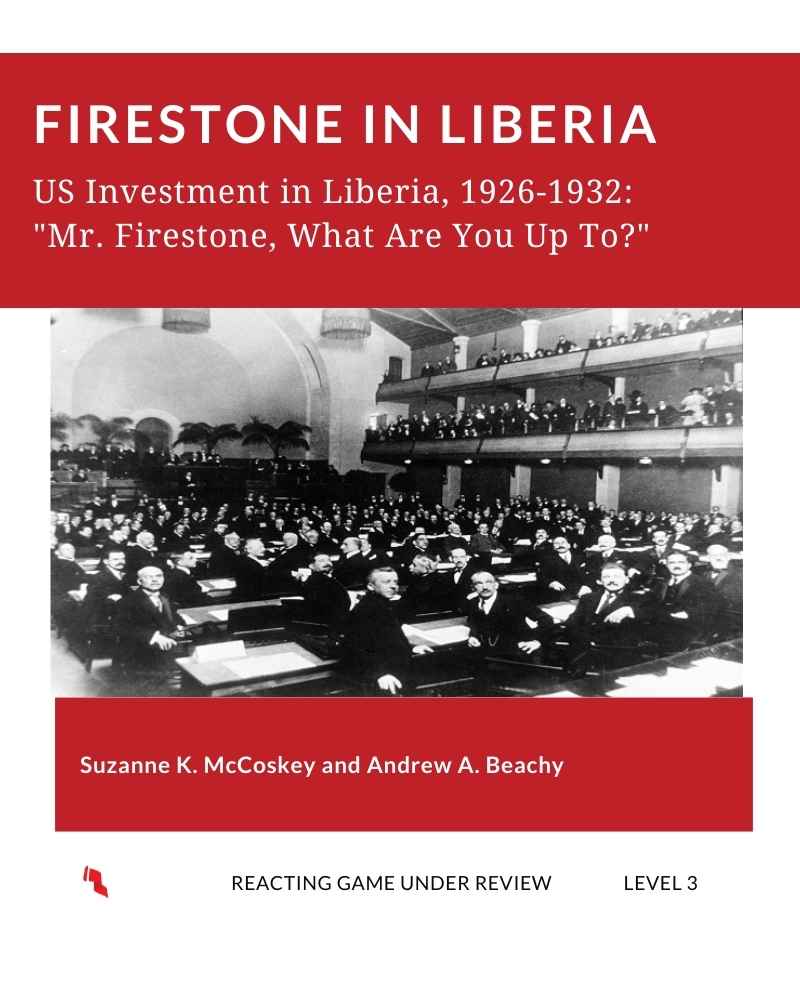 | U.S. Investment in Liberia, 1926-1932: "Mr. Firestone, What Are You Up To?" The ambitious investment by the Firestone Tire & Rubber Company in the West African country of Liberia is at a crossroads. Recent reports of slave labor in Liberia have come to the attention of the League of Nations and US State Department and the international attention given to these reports could have a grave impact on the future of the Company. The League of Nations has investigated the labor issues in Liberia and has called witnesses to London to provide their testimony: should the future of this troubled country include a role for the US company or is it time for Firestone to leave Liberia? 6-9 Sessions 14-30 Students 20th Century Africa
|
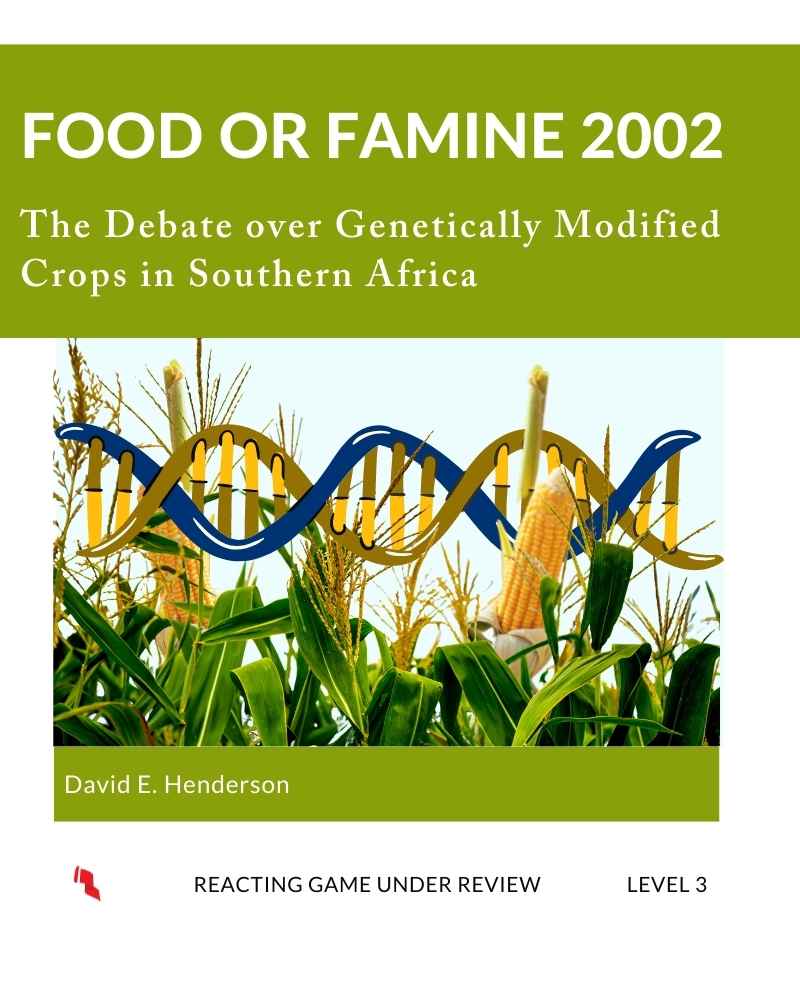 | Food or Famine, 2002: The Debate over Genetically Modified Crops in Southern Africa Set in an African conference at which nations facing famine are confronted with the choice between accepting genetically modified (GM) corn from the USA and the risk that they will not be able to export their agricultural products to the EU as a result or allowing people to starve. Students learn about GM foods and the controversies over their safety, both for health reasons and ecological reasons. 4-5 Sessions 6-29 Students 21st Century Africa, International
|
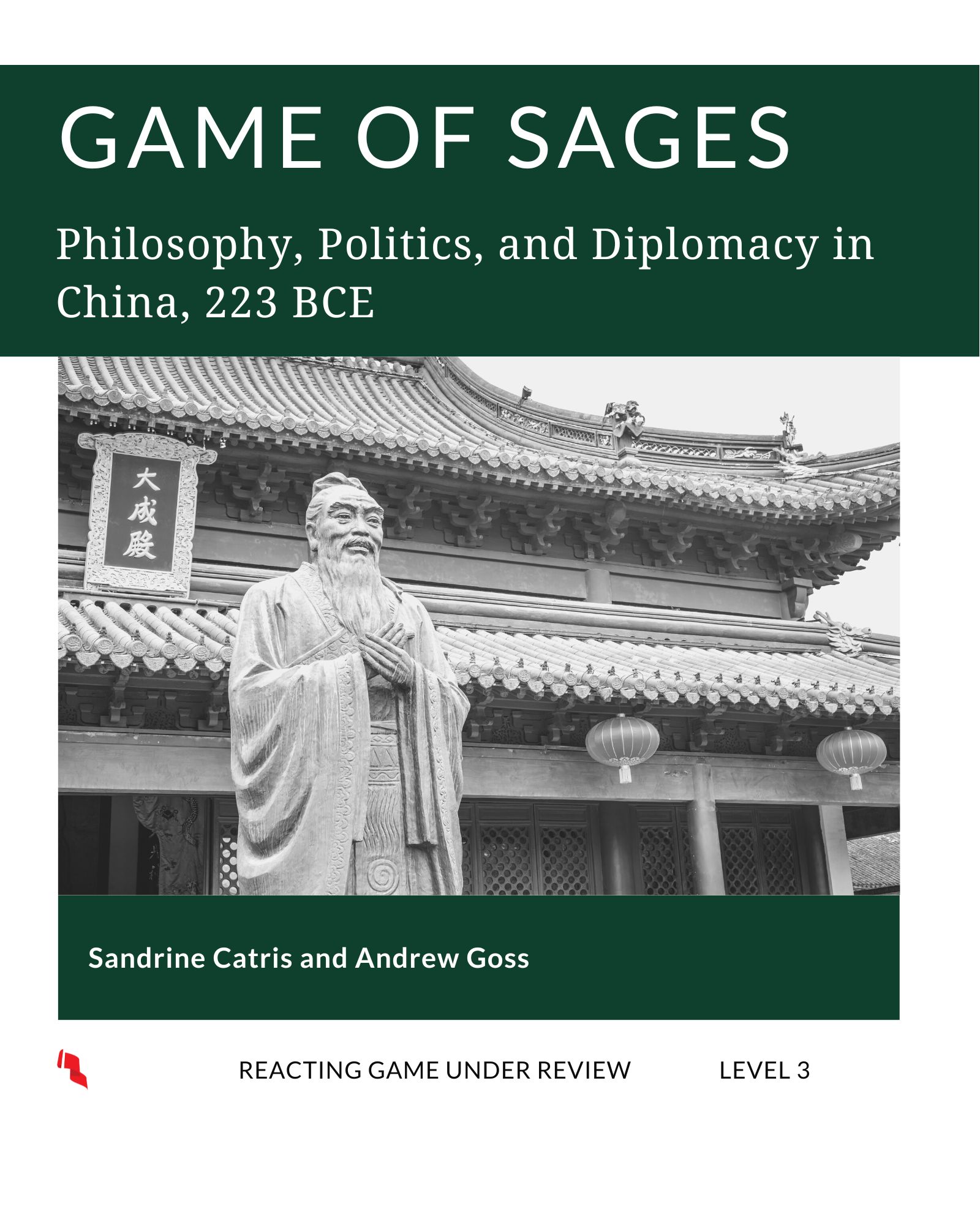 | Philosophy, Politics, and Diplomacy in China, 223 BCE This game takes place at the end of the Warring States period in China, at a time when Qin state has already absorbed two of the previously existent seven states, and is threatening the remaining four states of Chu, Qi, Zhao and Yan. The simulation is structured as a debate amongst the four most influential philosophical legacies of the Warring States era: Confucianism, Naturalism, Legalism, and Mohism. 7 Sessions 13-35 Students 3rd Century BCE Asia
|
| Transforming the Roman World, 376-382 CE Set in the Roman Empire of the late fourth century, The Gothic Crisis asks students to negotiate the terms under which Gothic refugees from beyond the Danube River will be settled within the lands of the Roman Empire. In debating issues such as military obligations and legal status, players will explore the interactions between Romans and barbarians and the diverse ways of envisioning the relationship between barbarian and Roman identity. Meanwhile, players will compete for honors and status within their factions, navigate potential conspiracies, and confront the perpetual possibility of a Gothic rebellion against the Roman Empire. 5-11 Sessions 13-36 Students 4th Century CE Europe
|

| The Capitulation of Granada and the Year that Forged Spain In this game, students negotiate the capitulation of the Islamicate Kingdom of Granada to the combined forces of Isabel of Castile and Fernando II of Aragon, while also planning a spectacle to communicate to the people what has transpired. In the simulation, students grapple with the realities of macro-political changes in an age where religious identities, public spectacle, and royal diplomacy collide to produce new and unexpected outcomes. Meanwhile, a wide array of "International Opinion" characters shape the outcomes of the negotiations between the two sides – from Turkish Admirals and Mamluk travelers to Portuguese judges and English heralds, many voices will be heard at the fall of Granada. 7 Sessions 14-33 Students 15th Century Europe
|

 | The Mongol Qurultai of 1246 This game brings together the rival members of the Mongol royal family and representatives from across Eurasia to debate the legacy of Genghis Khan, appoint a successor to the Mongol throne, promote interreligious dialogue between Islam, Buddhism and Christianity, and plot where the vast Mongol Empire should expand next. 3-6 Sessions 15-40 Students 13th Century Asia, Europe
|
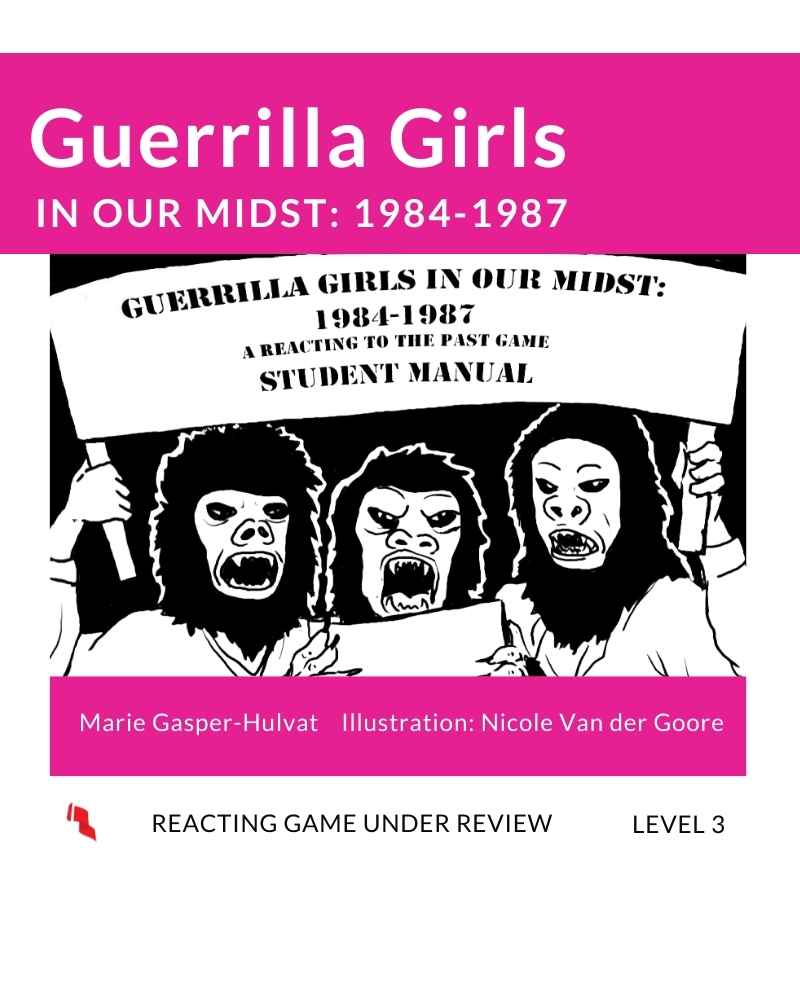 | Guerrilla Girls in our Midst: 1984-1987 The booming 1980s New York City art scene saw the emergence of a feminist art collective known as the Guerrilla Girls who exposed contemporary art world sexism and racism. Major questions for debate range from whether the art world is sexist and should embrace affirmative action to whether artistic quality even matters, who gets to determine such quality, and whether one can legitimately tie quality to sincerity of expression within a postmodern world. 8-9 Sessions 10-34+ Students 20th Century North America
|
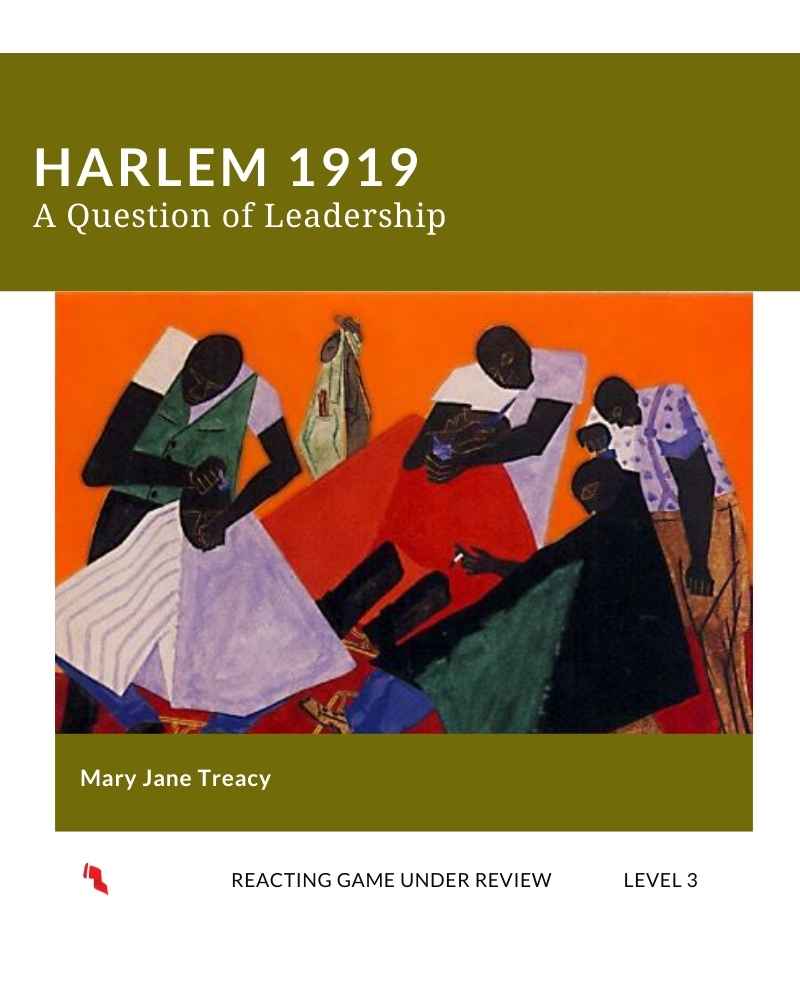 | Harlem, 1919: A Question of Leadership EDDIE's is a fictional barbershop where men of all social stations converge to discuss the news of the day. EDDIE’s barbers vie to persuade the clients that their favored leader’s point of view will take the community into the next decade. Although the barbers support W.E.B. Du Bois, Marcus Garvey, and A. Philip Randolph, other ideas –both traditional and radically new—will emerge as the game unfolds. 6-7 Sessions 20-25 Students 20th Century North America
|
| HANDS OFF AFRICA! How will European colonialism end and what shape will independent Africa take? Should the nation-state remain the paramount political unit for independent African states, as it has been for the European powers, or is something different desirable or even possible? If the colonizers refuse to cede power, what strategies and tactics should Africans adopt to win their independence? Is violence ever justified? At the All African People's Conference you will engage with these and other questions about the future shape of the continent and political and economic forms for African peoples. |

| HUICHANG PERSECUTION, 841 How will European colonialism end and what shape will independent Africa take? Should the nation-state remain the paramount political unit for independent African states, as it has been for the European powers, or is something different desirable or even possible? If the colonizers refuse to cede power, what strategies and tactics should Africans adopt to win their independence? Is violence ever justified? At the All African People's Conference you will engage with these and other questions about the future shape of the continent and political and economic forms for African peoples. 6-9 Sessions 14-30 Students 9th Century Asia
|

 | Beware the Ides of March: Rome, 44 BCE Julius Caesar has been assassinated and it's up to the Senate to push Rome forward. Probable debates in the Senate fall under four general headings: public order, Caesar's powers, foreign policy, and government. By grappling with the complex issues of Roman power politics at a moment of crisis, students gain perspective on the dynamics of late Republican Roman history and can evaluate Rome's subsequent evolution. 5-6 Sessions 12-24 Students 1st Century BCE Europe
|
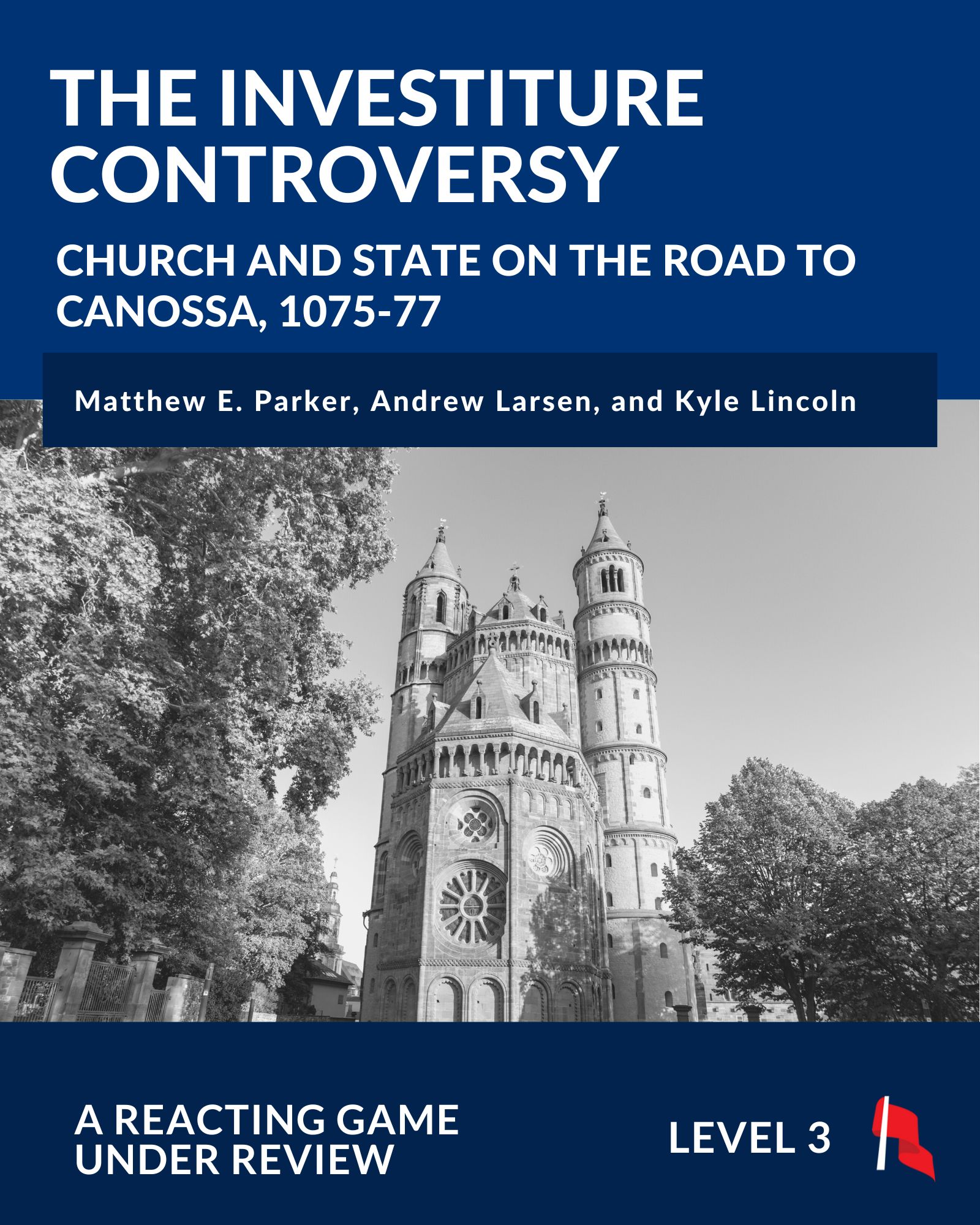 | Church and State on the Road to Canossa, 1075-77 Religious and secular powers clash as Western Christendom must decide who holds ultimate authority, the Pope or Holy Roman Emperor. Students will explore the intricate workings of the medieval church and how it interacted with the state in a tumultuous time. 6-7 Sessions 14-38 Students 11th Century Europe
|
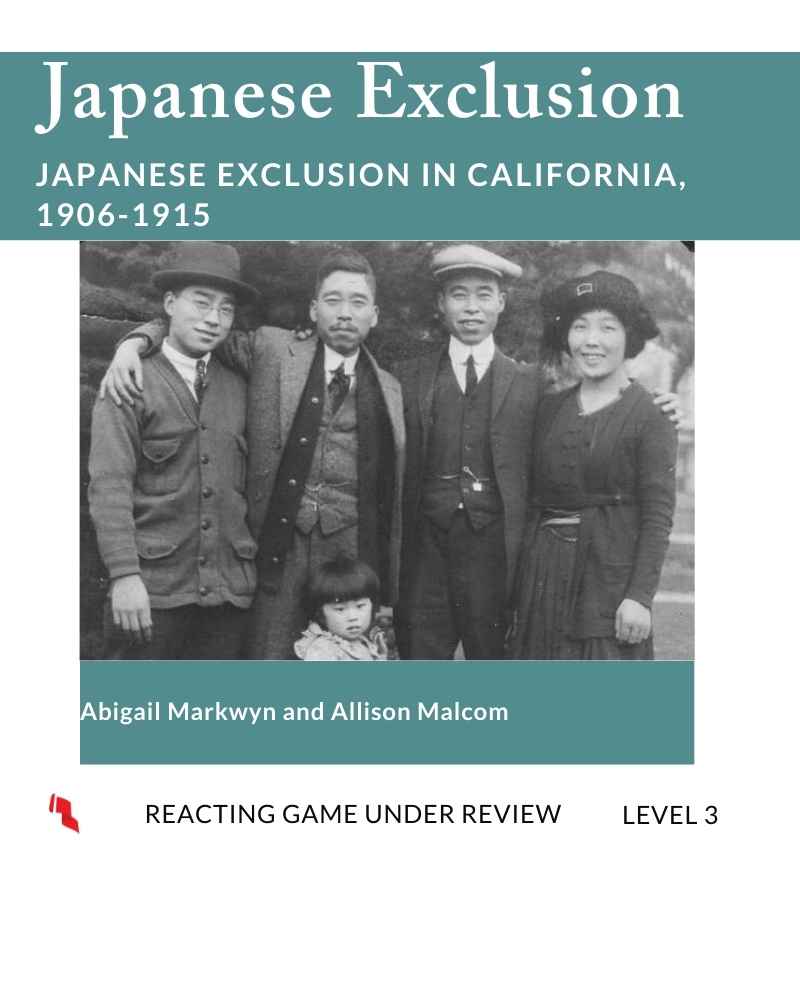 | Japanese Exclusion in California, 1906-1915 In the wake of the 1906 earthquake, a progressively-minded San Francisco School Board votes to remove Japanese schoolchildren from their regular schools in order to send them to the segregated “Oriental School” in Chinatown. This event occurs against a backdrop of violent attacks on Japanese people in California. 6-12 Sessions 10-42 Students 20th Century North America
|
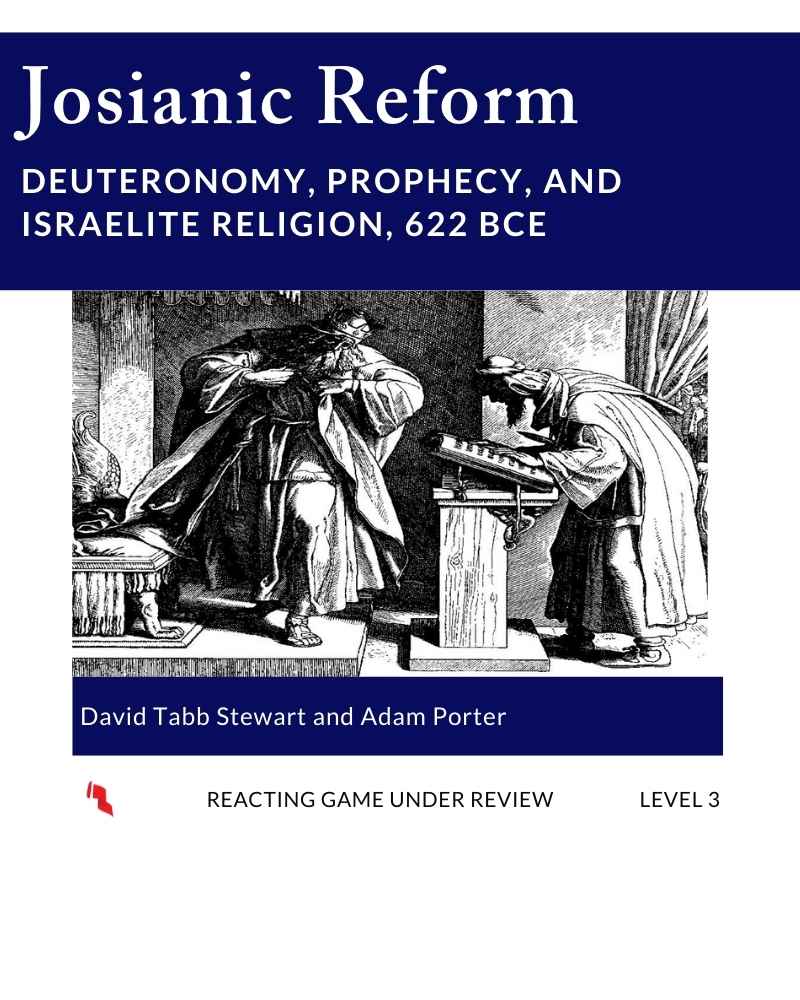 | The Josianic Reform: Deuteronomy, Prophecy, and Israelite Religion Set just before a monotheistic reform of Israelite religion (622 BCE), the game takes up several tensions within the Bible: “the one versus the many gods,” the nature of sacred text and prophecy, and the conflict of ideas within the Bible itself. The Documentary hypothesis—the literary-historical notion that the Torah grew out of a set of traditions, documentary “sources,” and editorial activity—takes seriously the competing idea sets within the Bible. 6-12 Sessions 10-42 Students 20th Century Southwest Asia
|
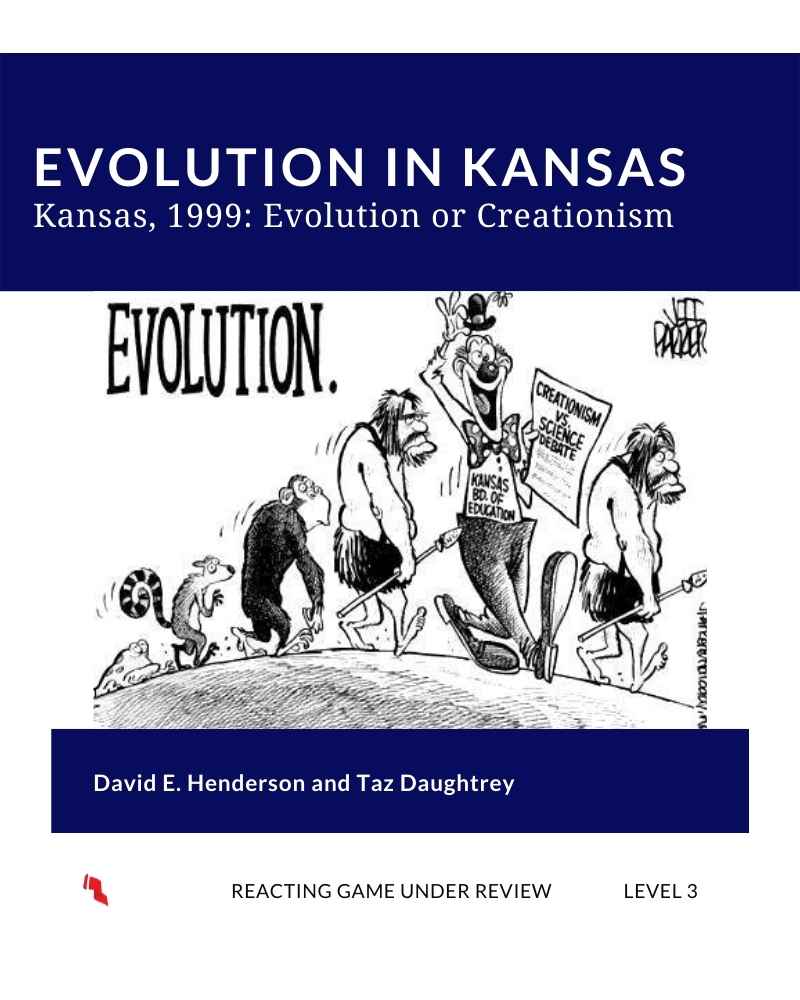 | Kansas, 1999: Evolution or Creationism Christian Conservatives on the Kansas Board of Education have deleted macroevolution and Big Bang cosmology from the state science curriculum. The game centers on the election of a new Board of Education which must, for legal reasons, revisit the decision. Questions are raised about the role of religion in American society, the power of religious fundamentalism in the modern world, and the nature of science. 7-9 Sessions 12-30+ Students 20th Century North America
|
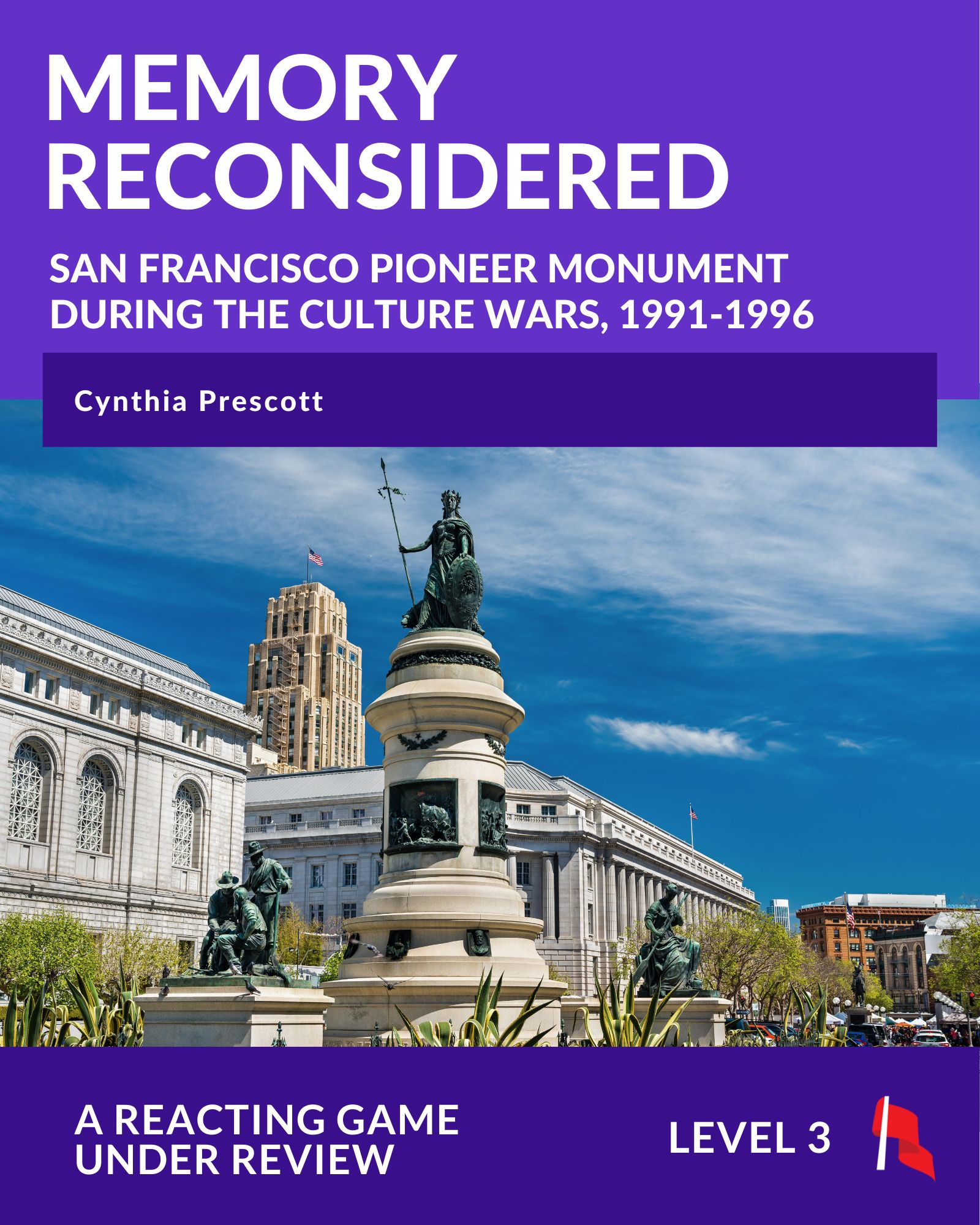 | Memory Reconsidered: San Francisco Pioneer Monument During the Culture Wars, 1991-1996 Amid the 1990s Culture Wars, players debate whether to preserve, relocate, reinterpret, or remove a controversial public monument. Debates are centered around the connection between memory and identity and the impact of history on public issues. 4-8 Sessions 12-31 Students 20th Century North America
|
| OKLAHOMA REVOLUTION In the early 20th century, three things were true about Oklahoma: it had the highest American Indian population in the nation; it was the most socialist state in the country; and (after 1917) it had the highest Ku Klux Klan membership per capita. In the 1920s, the so-called second Klan was a major force throughout the United States, and it was much more catholic in its hatred than its Reconstruction predecessor. In the 46th state, things came to a head in 1922 when socialists elected their candidate for governor, determined to break the Klan’s hold on the state. Will they succeed, or will the racists triumph? 6 Sessions 14-28 Students 20th Century North America
|

 | Physician-Assisted Suicide: Autonomy, Ethics, Morality, and the End of Life The California legislature, governor, and courts consider approval of the End of Life Option Act (EOLA) to legalize physician-assisted suicide. Players engage in the forty-year debate from 1976-2016 springing from the case of Karen Ann Quinlan, which raised questions about whether there is a right-to-die, the roles of family and physicians, and how the constitutional right to privacy is involved in end-of-life decisions 7-9 Sessions 14-30+ Students 20th Century North America
|
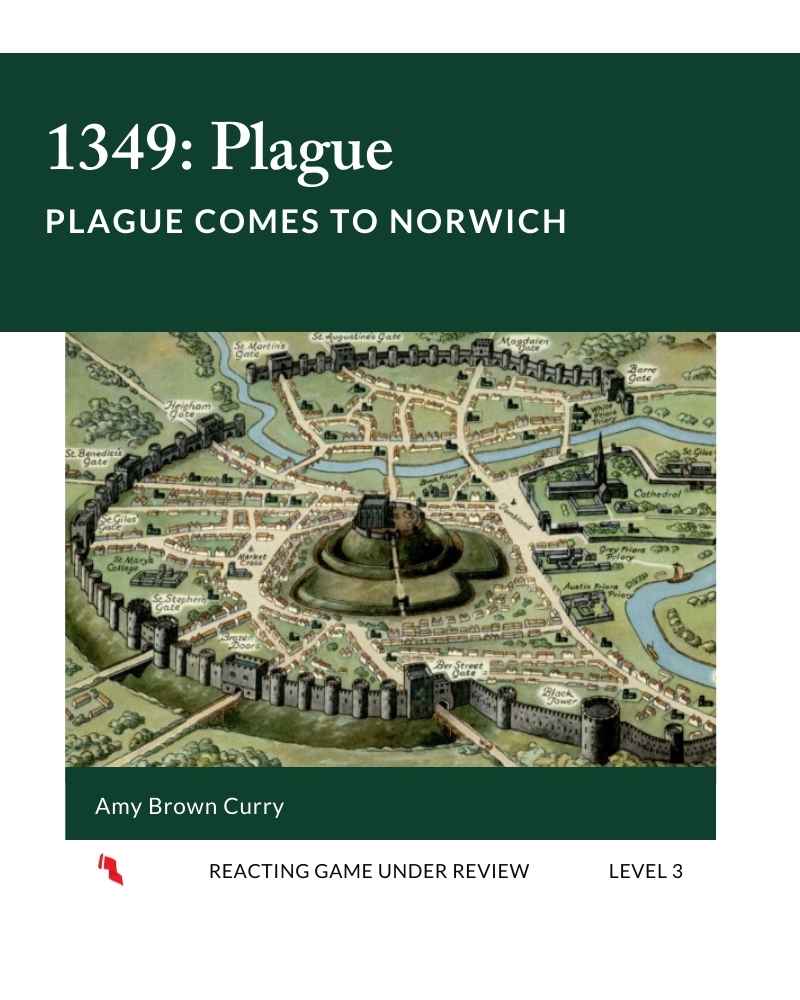 | 1349: Plague Comes to Norwich It's January of 1349, and the bustling city of Norwich faces the rising threat of plague. Members of the community, including merchants, clergy, tradesmen, medical men, and bailiffs, must decide how best to respond to uncertain and rapidly changing circumstances. Should the city impose a quarantine? How can one balance the need for health measures and economic interests? What is the role of religion in protecting a community? You might win an argument, but will that save your life? 5-8 Sessions 12-26 Students 14th Century Europe
|
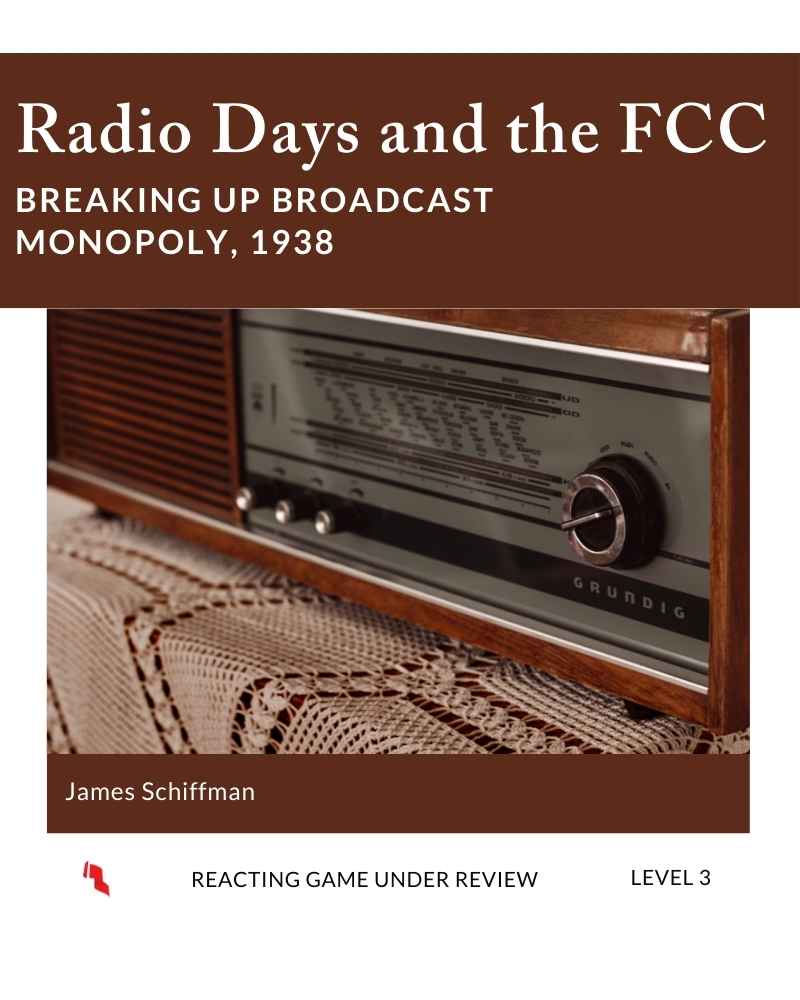 | Radio Days and the FCC: Breaking up Broadcast Monopoly The Federal Communications Commission is holding hearings on what to do about the perceived monopoly power that the major radio networks – NBC and CBS – exercise over their affiliated stations. Game sessions involve witnesses taking testimony on a series of six questions before the Commission and culminates in a final, decisive vote that will decide the future of the radio industry. 5-13 Sessions 10-28 Students 20th Century North America
|
| Britain in the 1840s Reform or Revolution? Britain in the 1840s places students in the British House of Commons across six sittings, from Sir Robert Peel's accession to office in autumn 1841 to the Corn Law crisis of 1846. Each student takes the part of a real Member and pursues that Member's aims through Prime Minister's Questions, floor debate, and division, arguing the great questions of the decade: the Corn Laws and the price of bread, the income tax, the workhouse and factory labor, the place of Catholics and Dissenters in a Protestant state, the government of Ireland, and the Chartist demand for a democracy that does not yet exist. 9 Sessions 15-32 Students 19th Century Europe
|

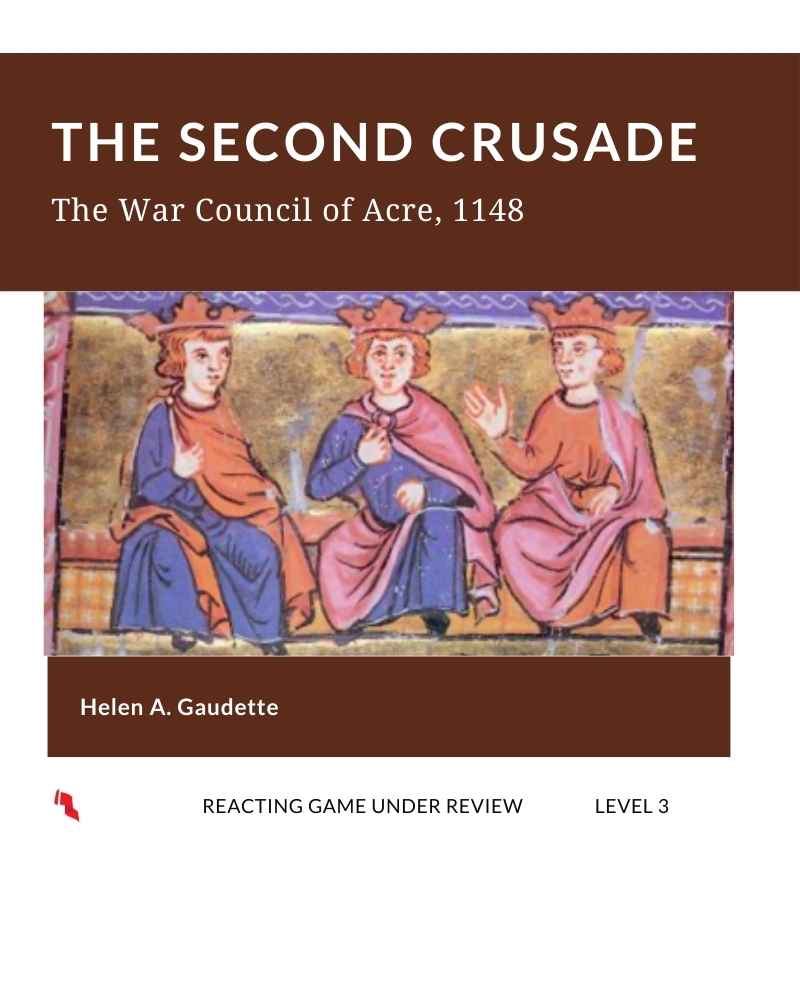 | The Second Crusade: The War Council of Acre, 1148 Takes place at the War Council of Acre in 1148, as the Pope has called for a second crusade. The council must debate the idea of “crusading,” the justifications for holy war, who will lead it, and how it will be conducted. Players become the monarchs, barons, and religious authorities present at the council. They are informed by the New Testament and the Qur’an, as well as the writers who described it. At the end, players will find out if their crusade was a success! 7-9 Sessions 15-30 Students 12th Century Europe, SW Asia
|
| SEEKING JUSTICE For over five decades, Colombia was torn apart by conflict between the government and the FARC, leaving hundreds of thousands dead and millions displaced. Seeking Justice puts students at the heart of the 2012–2016 peace negotiations, where diplomats, international mediators, and civil society members must navigate the delicate balance between justice and reconciliation. With roles ranging from high-level diplomats to impassioned citizens, Seeking Justice immerses students in the complexities of peacebuilding. Will they broker a deal that leads to a stable future, or will history repeat itself? 6-10 Sessions 12-28 Students 21st Century Latin America
|

| STUPOR MUNDI In Stupor Mundi students will take the role of members of the High Court (Haute Cour), of the Kingdom of Jerusalem and debate a series of legal cases that illuminate the social world of the Crusader States in the 13th century. The game takes place in the Kingdom of Jerusalem in 1228-1229, during what would become known as the Sixth Crusade, which serves as a backdrop for exploring contentious legal issues of the time. The game begins as Frederick II, called Stupor Mundi, or ‘Wonder of the World,’ because of his immense wealth, political power, and intellect, arrives in the Kingdom of Jerusalem. Frederick holds the title of the King of Sicily, King of Germany, and Holy Roman Emperor, and had recently become King of Jerusalem through marriage. When Frederick arrives in the Kingdom, he engages in a series of legal battles with powerful nobles of the Kingdom, most notably John of Ibelin. The game uses these debates to explore contested notions of the purpose of law and the power of the monarch in the High Middle Ages, and through these deliberations, teaches students about life in the first overseas European proto-colonies. 8-10 Sessions 12-28 Students 13th Century Europe/SW Asia
|

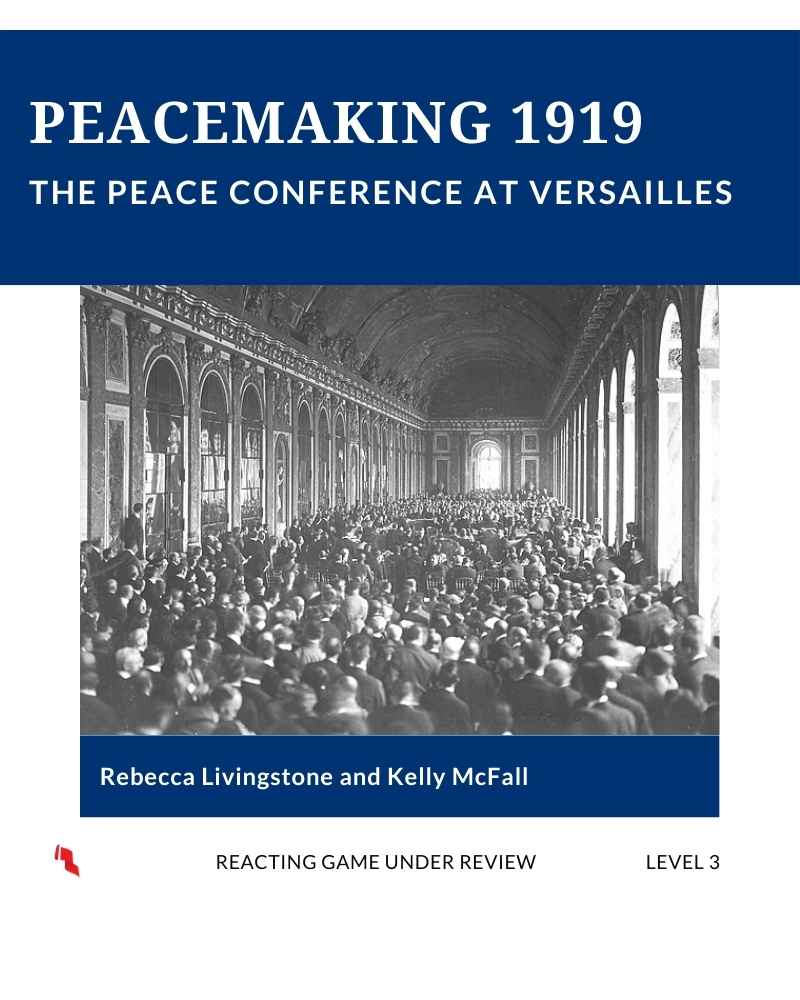 | Peacemaking, 1919: The Peace Conference at Versailles Places students in the complicated and politically fraught peace conference that will bring an end to the Great War. Students represent nations as they seek to bring about peace not only for the present, but also the future. For this game, students work primarily in topical subcommittees charged with recommending course of action to the Council of Five. The result will be a treaty by many hands, many visions, and many competing interests. 7-9 Sessions 10-28 Students 20th Century Europe, International
|
 | A Different Kind of War: The United States, The Cold War, and Vietnam, 1963-65 The game examines the violent and sometimes brutal interactions between communist efforts to liberate the nations of the “Third World” from colonialism, American fears about Communist aggression, the resulting US strategy of containment, and the volatile situation in Southeast Asia during the mid-1960s. 5-9 Sessions 25-30 Students 20th Century North America
|
| WESTPHALIA, 1648
7 Sessions 12-33+ Students 17th Century Europe
|

JOIN THE REACTING CONSORTIUM
We're a committed and supportive community. What are you waiting for? Join today.