 |
Play this game recently? | This Game is in Reacting 3.0 Format!
In Negotiating Peace at Westphalia, 1648, students take on the identities and victory objectives of European ambassadors to negotiate a resolution to the Thirty Years War. The 1648 peace congress in Westphalia was the first-ever secular peace conference in Europe and, like the war it concluded, it was larger, more complex, and more revolutionary than any that came before. Ambassadors will have to determine whether to end the war by apportioning territories and financial reparations or follow a new option: instituting an Act of Oblivion. They must determine whether to allow religious diversity to become permanent and how to define the “German Liberties” of individual estates in relation to the Holy Roman Empire. They address practical and philosophical disputes and work together to create a set of treaties that resolve the issues in the war and set up a European system where peace is assumed to be the normal relationship between monarchies and territories in Europe. Negotiations can be influenced by battles between armies still active in the field and by marriage alliances among members of Europe’s noble dynasties. |

Details
|
Using the Game
Class Size and Scalability |
 GAME MATERIALS
Reacting Consortium members can download all game materials below. You will be asked to sign in before downloading.
Gamebook Students need a Gamebook, which includes directions, resources, and historical context. | Instructor's Manual The Instructor's Manual includes guidance for assigning roles, presenting historical context, assignments, activities and discussion topics, and more. | Role Sheets and Handouts Students also need a Role Sheet, which contains biographical information, role-specific resources or assignments, and their character's secret victory objectives. |
Additional Resources
Emily Gray
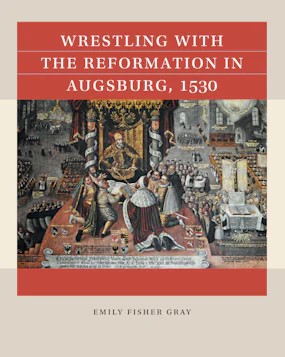
Emily Fisher Gray is Professor of History at Norwich University, specializing in Early Modern Germany, social and religious history. Her very active students have embraced Reacting with such enthusiasm that it has become an essential part of every course. Gray is the author of Wrestling with the Reformation in Augsburg, 1530, a microgame on the Schilling Revolt of 1525, and other games in development. Her academic research relates to Lutheran church building and religious co-existence in the sixteenth and seventeenth centuries.
|
Members can contact game authors directly if they have questions about using the game. We also invite instructors join our Facebook Faculty Lounge, where you'll find a wonderful community eager to help and answer questions.
|
|
|